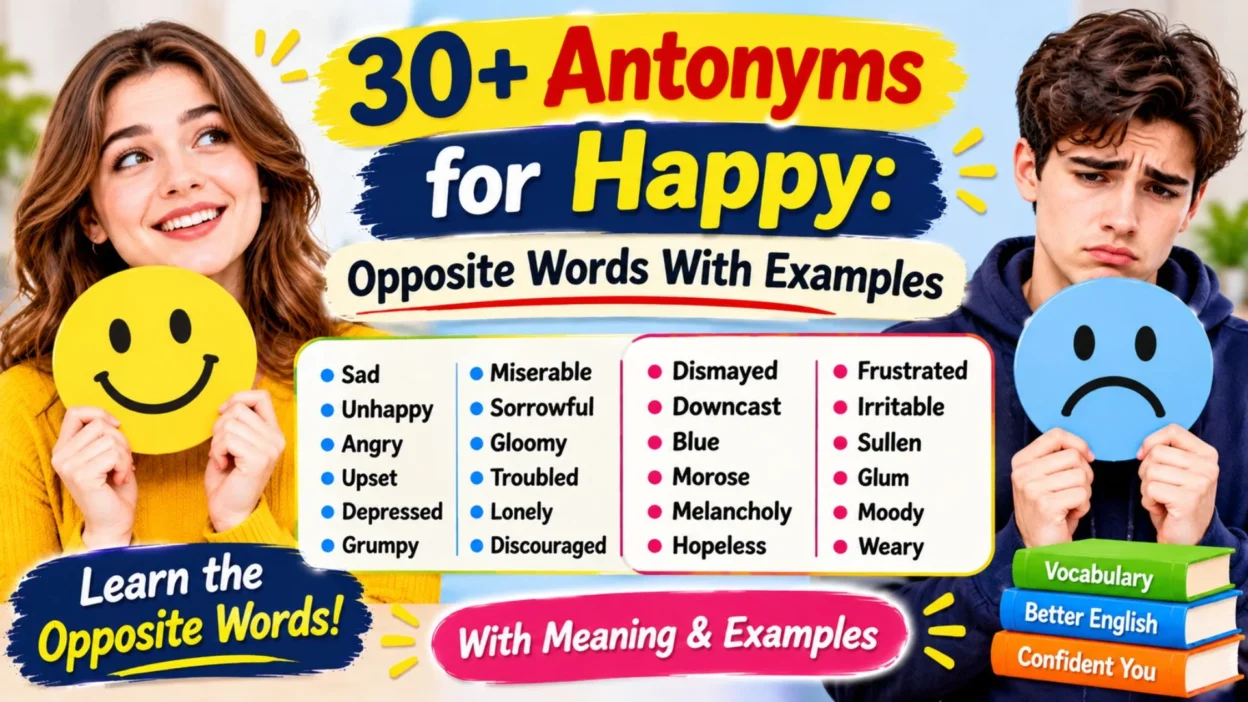
The word happy describes a feeling of pleasure, joy, or satisfaction. We use it when something good happens or when we feel positive about life. However, sometimes we need a different word to express the opposite feeling. That is where antonyms for happy become useful.
An antonym is a word that has the opposite meaning of another word. For example, sad is a common antonym of happy. Other words, such as unhappy, miserable, and gloomy, can also express feelings opposite to happiness.
In this guide, you will discover more than 30 antonyms for happy, learn their meanings, and see how to use them in everyday sentences.
What Is the Opposite of Happy?
The most common opposite of happy is sad. It describes a feeling of unhappiness, disappointment, or sorrow.
However, the best opposite depends on the situation. For example:
- Sad: Feeling unhappy or upset.
- Unhappy: Not feeling happy or satisfied.
- Miserable: Feeling extremely unhappy.
- Gloomy: Feeling sad or showing little hope.
- Depressed: Feeling very low or unhappy over a period of time.
Each word expresses a slightly different feeling. Therefore, choosing the right antonym can make your writing and conversations more accurate.
30+ Antonyms for Happy With Meanings
Here are useful words that have opposite or contrasting meanings to happy.
AntonymMeaningSadFeeling unhappy or sorrowfulUnhappyNot feeling happyMiserableExtremely unhappyGloomyFeeling sad or hopelessSorrowfulFull of sadnessDepressedFeeling very lowMelancholyA deep, thoughtful sadnessCheerlessWithout happiness or joyDismalSad, depressing, or unpleasantDejectedFeeling disappointed and lowDownheartedFeeling discouraged or sadHeartbrokenExperiencing deep emotional painDistressedFeeling worried or upsetDisappointedUnhappy because something did not happen as hopedMournfulExpressing sadness or griefWoefulFull of sorrow or miseryGlumQuietly unhappyBlueFeeling sadUpsetUnhappy or troubledWretchedExtremely unhappy or unfortunateForlornLonely, abandoned, or sadDiscontentNot satisfied with somethingDissatisfiedNot pleased with a situationPessimisticExpecting negative outcomesMoroseUnhappy and unwilling to be cheerfulSullenSilent and bad-temperedGrief-strickenOverwhelmed by deep sadnessUncheerfulNot cheerful or joyfulDejectedLow in spiritsAggrievedFeeling unfairly treated or upset
Note: Some of these words describe sadness, while others express disappointment, dissatisfaction, or a lack of joy. They are not interchangeable in every sentence.
Common Antonyms for Happy in Everyday English
Some antonyms are more common in daily conversations than others. Here are a few useful choices.
1. Sad
Sad is the simplest and most common opposite of happy. It describes a person who feels unhappy because of a difficult situation or disappointing experience.
Examples:
- She felt sad after saying goodbye to her friends.
- The movie had a sad ending.
- He looked sad when he heard the news.
2. Unhappy
Unhappy means not happy or satisfied. It can describe a person’s feelings, a situation, or an experience.
Examples:
- She was unhappy with the final result.
- The child looked unhappy about leaving the park.
- He felt unhappy at his new job.
3. Miserable
Miserable describes a much stronger feeling of unhappiness than sad. It is often used when someone feels extremely uncomfortable or unhappy.
Examples:
- I felt miserable after losing my wallet.
- The rainy weather made everyone miserable.
- He was miserable without his family.
4. Gloomy
Gloomy means sad, dark, or lacking hope. It can describe a person’s mood, the weather, or the atmosphere of a place.
Examples:
- She had a gloomy expression on her face.
- The cloudy sky made the afternoon feel gloomy.
- He sounded gloomy after the meeting.
5. Disappointed
Disappointed describes the feeling you have when something does not happen as expected.
Examples:
- I was disappointed with my exam results.
- She felt disappointed when the event was canceled.
- They were disappointed by the team’s performance.
6. Dejected
Dejected means feeling low in spirits, especially after a failure or disappointment.
Examples:
- The player looked dejected after losing the match.
- She felt dejected when her application was rejected.
- He walked home with a dejected expression.
Antonyms for Happy Based on Different Situations
The best antonym for happy depends on what you want to describe. Here are some examples based on different situations.
When Someone Feels Sad
Use these words when someone is experiencing sadness:
- Sad
- Sorrowful
- Mournful
- Melancholy
- Heartbroken
- Grief-stricken
Example: She felt heartbroken after losing someone she loved.
When Someone Is Not Satisfied
Use these words when a person is unhappy with a result, decision, or experience:
- Dissatisfied
- Discontent
- Unhappy
- Disappointed
- Aggrieved
Example: The customer was dissatisfied with the service.
When Someone Feels Hopeless
These words describe a person who has little hope or feels discouraged:
- Gloomy
- Pessimistic
- Forlorn
- Dejected
- Despondent
Example: He became pessimistic after several unsuccessful attempts.
When Someone Feels Extremely Unhappy
These words express stronger negative emotions:
- Miserable
- Wretched
- Woeful
- Distressed
- Grief-stricken
Example: The family felt miserable after the unexpected news.
Happy vs. Its Antonyms: Example Sentences
Understanding opposite words becomes easier when you compare them in sentences.
Happy SentenceOpposite SentenceShe is happy today.She is sad today.He feels happy at work.He feels unhappy at work.They were happy with the result.They were disappointed with the result.The children looked happy.The children looked gloomy.I am happy with my purchase.I am dissatisfied with my purchase.She felt happy after winning.She felt dejected after losing.He seems happy about the news.He seems miserable about the news.
These comparisons show how changing one word can completely change the meaning of a sentence.
What Are Some Formal Antonyms for Happy?
If you want to improve academic or professional writing, you can use more formal alternatives instead of repeating the word sad.
Some formal antonyms and contrasting words include:
- Discontented: Not satisfied with a situation.
- Dissatisfied: Feeling that something is not good enough.
- Despondent: Having lost hope or confidence.
- Melancholy: Experiencing deep or thoughtful sadness.
- Mournful: Showing sorrow or grief.
- Dejected: Feeling discouraged or disappointed.
- Morose: Unhappy and often bad-tempered.
Example: Instead of writing, “The employee was unhappy with the decision,” you could write, “The employee was dissatisfied with the decision.”
These alternatives can make your writing more precise and expressive.
What Are Some Simple Antonyms for Happy for Kids?
Children can learn opposite words through simple examples. Here are some easy antonyms for happy:
HappyOppositeHappySadJoyfulUnhappyCheerfulGloomyGladUpsetPleasedDisappointedExcitedUnenthusiasticSmilingFrowningContentDissatisfied
Easy Sentences for Kids:
- I am happy when I play. I am sad when I lose my toy.
- The girl is cheerful. The boy is gloomy.
- Sam is glad to see his friend. Tom is upset because his friend is away.
- The child is pleased with the gift. The child is disappointed with the broken toy.
Learning these pairs helps children understand vocabulary and recognize opposite meanings.
How to Choose the Right Antonym for Happy
Not every antonym for happy works in every situation. The right word depends on the feeling or idea you want to express.
Follow these simple tips:
- Use sad for general feelings: It is the most common and straightforward opposite of happy.
- Use unhappy for a lack of happiness: It works well in everyday conversations and general writing.
- Use miserable for stronger feelings: Choose it when someone is extremely unhappy.
- Use disappointed for unmet expectations: It is suitable when something does not go as planned.
- Use dissatisfied for a lack of satisfaction: It is useful when discussing services, decisions, or results.
- Use gloomy for a low mood: It can describe both people and situations.
For example, if someone does not like a meal, dissatisfied may be more suitable than heartbroken. However, if someone experiences a serious personal loss, heartbroken may express the feeling more accurately than unhappy.
Frequently Asked Questions
1. What is the most common antonym for happy?
The most common antonym for happy is sad. It describes a feeling of sorrow, unhappiness, or emotional discomfort.
2. What are five antonyms for happy?
Five common antonyms for happy are sad, unhappy, miserable, gloomy, and sorrowful.
3. Is unhappy the opposite of happy?
Yes. Unhappy is a direct opposite of happy. Both words describe emotional states, but they express contrasting feelings.
4. What is a stronger word for sad?
Words such as miserable, devastated, heartbroken, and grief-stricken can express stronger feelings of sadness. The best choice depends on the situation.
5. What is a formal word for unhappy?
Formal alternatives include dissatisfied, discontented, despondent, melancholy, and dejected.
6. What is the opposite of happy in a sentence?
The opposite of happy in a sentence is often sad. For example, “She is happy today” becomes “She is sad today.”
7. Are joyless and unhappy the same?
They have similar meanings, but they are used differently. Joyless means lacking joy or pleasure, while unhappy describes a person or situation that is not happy.
Conclusion
Learning antonyms for happy helps you express different emotions more clearly and improve your vocabulary. Words such as sad, unhappy, miserable, gloomy, and disappointed are useful opposites, but each has its own meaning and level of intensity. Choose the word that best matches the situation, whether you are writing a sentence, having a conversation, or helping children learn opposite words. Understanding these differences will make your English more natural and effective.

Shehroz Ali is a digital content creator and the founder of SynonymVoro. He is passionate about vocabulary, language, writing, and creating useful online resources that make learning simple and accessible. Through SynonymVoro, he aims to help readers discover better words, improve their vocabulary, and communicate with greater clarity.